

Ancient Egyptian Jewelry for Sale | Fine Luxury Replicas

The Ultimate Luxury Buyer’s Guide Discovering authentic Ancient Egyptian jewelry for sale requires an eye for craftsmanship, deep appreciation for history, and an understanding of sacred symbolism. Whether you seek a fine lapis lazuli cartouche, a solid gold Ankh pendant, or a museum-quality handcrafted replica, acquiring Egyptian-inspired fine jewelry connects you directly to the timeless artistry of Pharaohs. This comprehensive guide explores historic symbolism, materials, buying considerations, and authentication tips to ensure your investment brings enduring elegance, cultural resonance, and museum-grade prestige to your personal collection.
The Enduring Legacy of Ancient Egyptian Jewelry for Sale Adornment
Jewelry in Ancient Egyptian Jewelry for Sale was never merely decorative; it was a potent blend of spiritual protection, social distinction, and artistic mastery. From the Predynastic era through the New Kingdom, Egyptians adorned themselves with intricate pieces crafted from precious metals and semi-precious stones. Both men and women of all social strata wore jewelry, though the materials used reflected one’s standing in society. Royals and high priests wore gold—considered the flesh of the gods—and silver, which was often rarer than gold in early periods.
The meticulous craftsmanship of ancient artisans set a global benchmark for goldsmithing techniques. Methods such as cloisonné, filigree, granulation, and glass inlaying were perfected thousands of years ago in workshops across Thebes and Memphis. Today, acquiring luxury Egyptian jewelry allows collectors to own a piece of this artistic heritage, bridging the gap between ancient ritualistic beauty and modern luxury fashion.
Iconic Ancient Egyptian Symbols and Their Meanings
Understanding the symbolic weight of Egyptian iconography is essential when selecting a meaningful piece for your collection. Ancient artisans infused every design with specific protective or transformative energies.
The Ankh: Key of Life
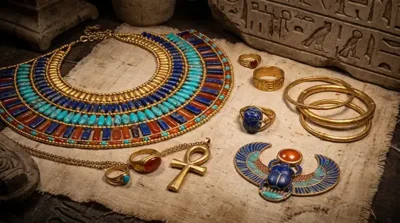
The Ankh represents physical and eternal life. Shape-wise, the loop symbolizes the sun rising over the horizon, while the vertical bar depicts its rays. Wearing an Ankh pendant serves as a timeless affirmation of life, renewal, and spiritual strength.
The Eye of Horus (Wadjet)
Associated with the falcon-headed sky god Horus, the Wadjet eye represents healing, wholeness, and psychic protection. Ancient Egyptians frequently placed Wadjet amulets within mummy wrappings to ensure safety in the afterlife and wore them daily to ward off negative energies.
Precious Materials of Ancient Egyptian Artisans
Ancient Egyptian jewellers utilized materials selected as much for their metaphysical attributes and color symbolism as for their aesthetic beauty.
- Gold (Nebu): Gold was venerated as a divine material that never tarnished or corroded. It symbolized the eternal sun god Ra.
- Lapis Lazuli: Imported from the ancient mines of Badakhshan (modern Afghanistan), this deep blue stone flecked with golden pyrite represented the night sky and divine wisdom.
- Turquoise (Mefkat): Mined in the Sinai Peninsula, turquoise was sacred to Hathor, goddess of joy, music, and motherhood. Its vibrant green-blue color signified spring growth and rebirth.
- Carnelian: A fiery orange-red chalcedony representing blood, energy, and the fiery aspect of the sun god.
Master Craftsmanship: How Museum-Grade Replicas Are Made
High-end Egyptian jewelry replicas produced today utilize the same foundational techniques practiced by ancient royal artisans, combined with modern metallurgical precision.
Lost-Wax Casting (Cire Perdue)
This ancient technique involves carving a master design in wax, surrounding it with investment material, melting away the wax, and pouring molten metal into the hollow cavity. This allows for extraordinary detail in intricate symbols like cartouches and winged scarabs.
Granulation and Filigree
Granulation involves fusing microscopic metal spheres onto a surface without solder, creating exquisite texture. Filigree utilizes twisted gold or silver wires soldered into delicate geometric motifs. Modern luxury artisans preserve these labor-intensive processes to replicate the exact weight and feel of antiquities.
Comprehensive Buying Guide for Egyptian Jewelry
When evaluating fine Ancient Egyptian jewelry for sale, follow this strategic decision matrix to ensure your purchase aligns with your taste, values, and investment goals.
- Verify Metal Purity: Look for clear hallmarking. Authentic fine jewelry pieces use solid 14k, 18k gold, or 925 sterling silver rather than cheap base-metal plating that wears off quickly.
- Inspect Gemstone Authenticity: Ensure stones like lapis lazuli, carnelian, and turquoise are natural, un-dyed gemstones rather than synthetic imitations or plastic composites.
- Evaluate Proportions and Weight: Museum-grade replicas possess substantial weight, accurate sacred geometry, and clean metalwork around setting borders.
How to Identify Authentic Museum-Quality Replicas
Distinguishing between mass-produced trinkets and high-end handcrafted jewelry requires attention to fine details:
- Proportional Hieroglyphs: High-quality cartouches feature historically correct, crisp hieroglyphic characters carved by knowledgeable artisans, rather than gibberish symbols.
- Gemstone Settings: Look for secure bezel or prong settings rather than surface-glued cabochons typical of costume jewelry.
- Hand-Finished Texture: Exceptional pieces showcase soft satin or hand-polished finishes reminiscent of ancient artifacts rather than overly uniform, ultra-bright chrome plating.
- Provenance and Certificates: Reputable jewelers provide detailed certificates of authenticity verifying material purities and historical context.
Price Factors & Market Value Breakdown
- Metal Weight & Purity: Solid 18k gold commands a higher market premium due to intrinsic value compared to 925 sterling silver.
- Gemstone Quality: Untreated natural lapis lazuli from historical sources with rich blue color and golden pyrite inclusions costs considerably more than reconstituted stones.
- Artisan Labor: Hand-carved, custom-engraved cartouches or handcrafted filigree work require significant labor from master goldsmiths, adding to the overall value.
Styling Tips for Luxury Egyptian Jewelry
Integrating Egyptian statement pieces into modern wardrobes creates an aura of sophisticated, timeless luxury.
- Minimalist Contrast: Wear a bold gold Eye of Horus pendant against a solid black turtleneck or clean white silk blouse to make the rich gold and gemstone colors pop.
- Layering Pendants: Pair an Ankh pendant with fine gold chains of varying lengths for an understated, bohemian-luxury aesthetic.
- Statement Rings: Feature a large lapis lazuli scarab ring on your index or middle finger, keeping other hand accessories minimal to allow the ring to serve as the focal point.
- Evening Elegance: Frame your face with dangling lotus-shaped turquoise and gold earrings when wearing an off-the-shoulder evening gown.
Caring for Your Egyptian Fine Jewelry
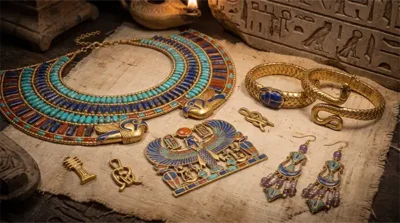
Proper care preserves the luster and longevity of your fine metals and natural gemstones for generations.
-
Avoid Harsh Chemicals: Perfumes, hairsprays, and household cleaners can discolor turquoise, lapis, and silver. Apply beauty products prior to putting on your jewelry.
-
Gentle Cleaning Methods: Clean natural gemstones with a soft, lint-free cloth dampened with warm water and mild dish soap. Avoid ultrasonic cleaners for porous stones like turquoise and carnelian.
-
Proper Storage: Store each piece separately in a fabric-lined jewelry pouch or box to prevent harder stones from scratching softer metals or turquoise surfaces.
Common Mistakes to Avoid When Purchasing
- Buying Base-Metal Plated Items: Plated zinc alloys corrode quickly and can cause skin irritation. Invest in solid precious metals like 925 silver or gold.
- Ignoring Symbol Context: Ensure you know the true historical meaning of the symbols you choose so your jewelry reflects your personal intentions accurately.
- Overlooking Clasp and Chain Quality: A heavy gold or silver pendant requires a sturdy chain and secure clasp mechanism (such as a lobster claw or spring ring) to ensure safety during wear.
Expert Tips from Master Jewelers
When selecting a personalized cartouche, always verify the exact hieroglyphic phonetic transliteration with a qualified Egyptologist or specialized jeweler. True luxury lies in both the physical craftsmanship and the historical accuracy of your sacred adornment.
- Tip 1: Pair warm gold metals with cool blue lapis lazuli for the most classic, historically accurate color combination favored by Tutankhamun’s royal jewelers.
- Tip 2: Opt for matte or satin finishes on gold pieces if you prefer a subtle, authentic vintage aesthetic that mimics ancient gold artifacts.
Investing in high-end Ancient Egyptian jewelry allows you to wear living history. By choosing pieces crafted from authentic precious metals and natural gemstones—adorned with sacred symbols like the Ankh, Eye of Horus, or personalized Cartouche—you possess more than mere fashion accessories. You carry forward thousands of years of artistry, divine protection, and royal elegance. Explore handcrafted collections with confidence, knowing how to identify superior quality, historic accuracy, and master craftsmanship.
Explore our exclusive collection at MythologyEgyptStore.com to find handcrafted Ancient Egyptian jewelry for sale. Discover solid 18k gold Ankhs, hand-carved sterling silver cartouches, and genuine lapis lazuli museum replicas crafted by master artisans. Enhance your personal style with the timeless allure of Pharaohs today!


