
Description
𝐃𝐞𝐬𝐜𝐫𝐢𝐩𝐭𝐢𝐨𝐧 𝐨𝐟 𝐀𝐫𝐭:
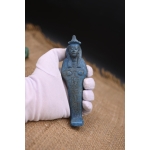
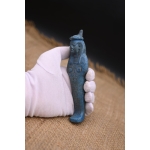
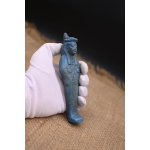
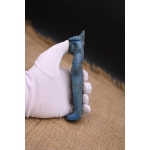
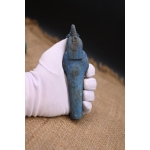
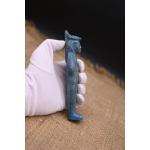
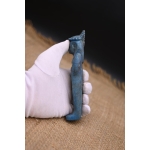
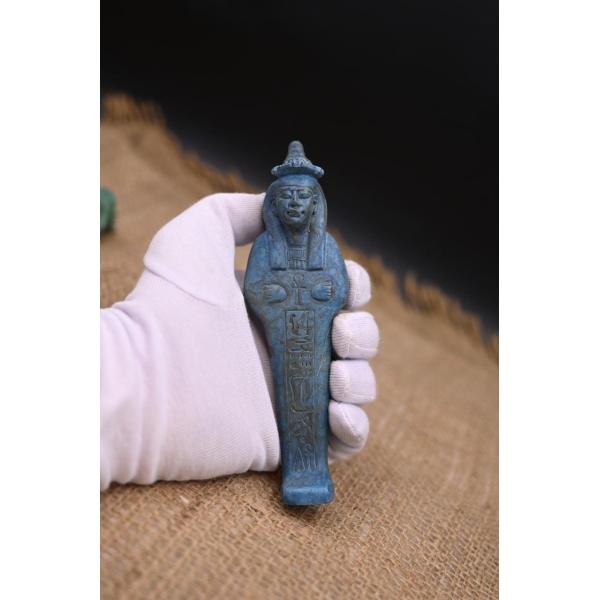
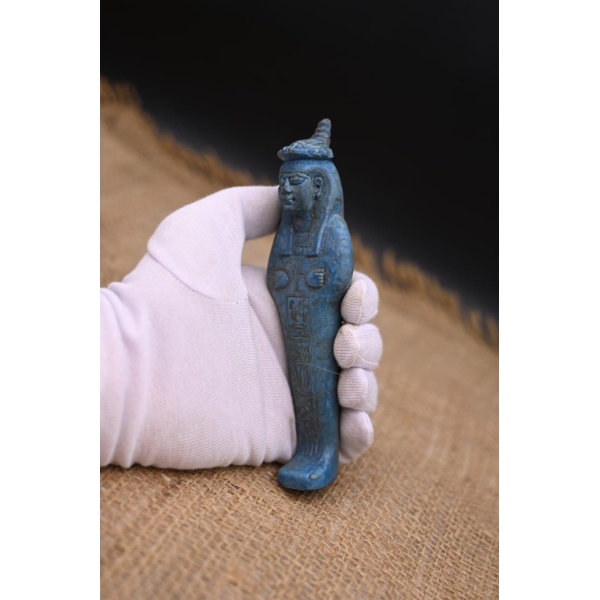
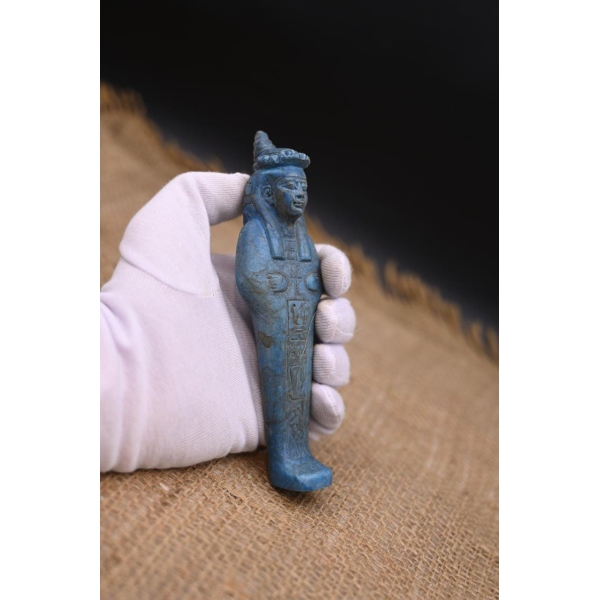
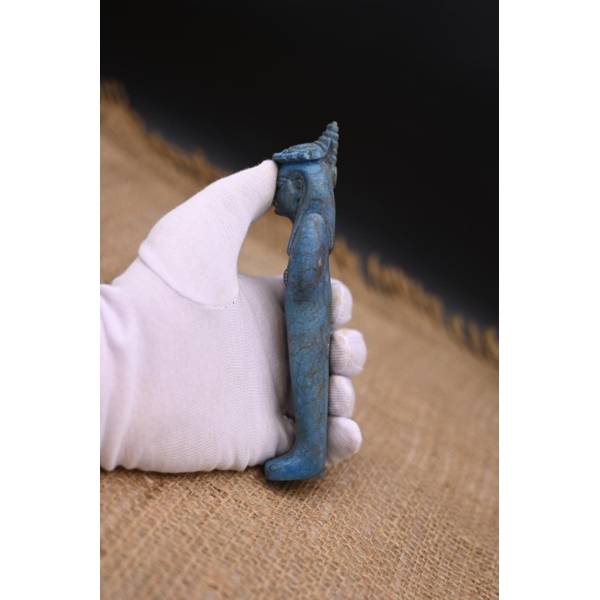
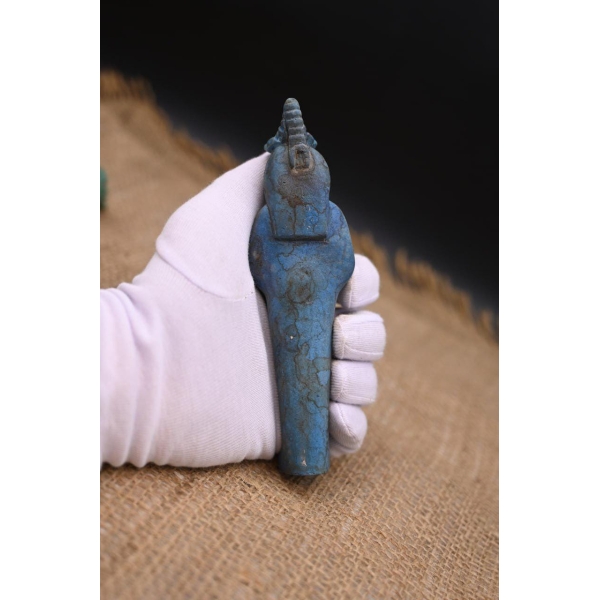
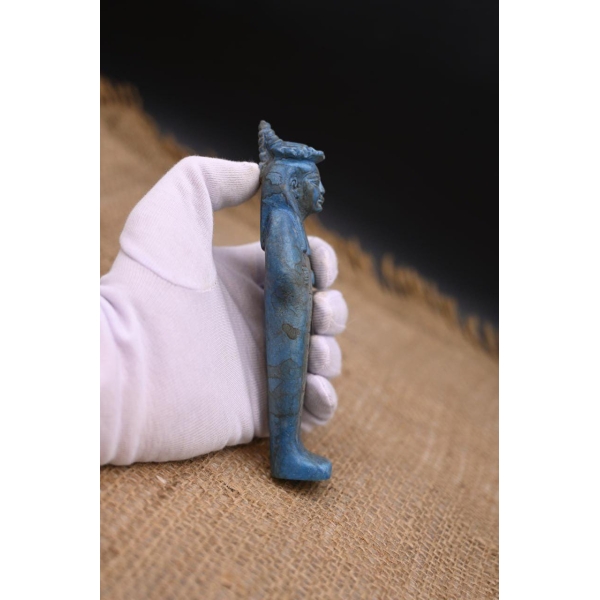
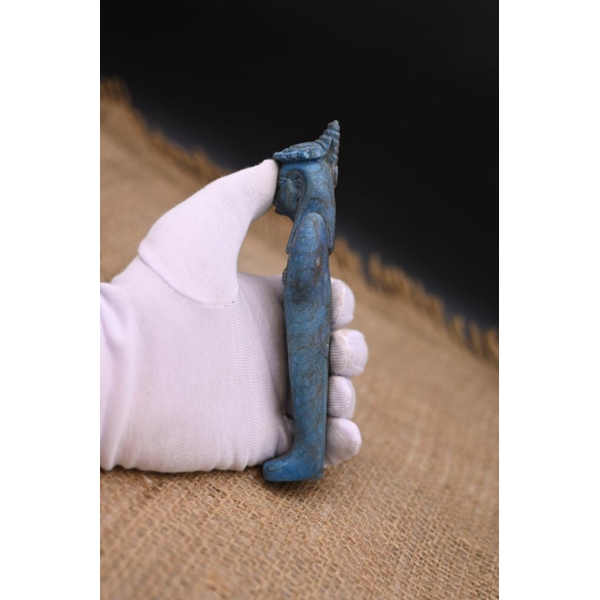
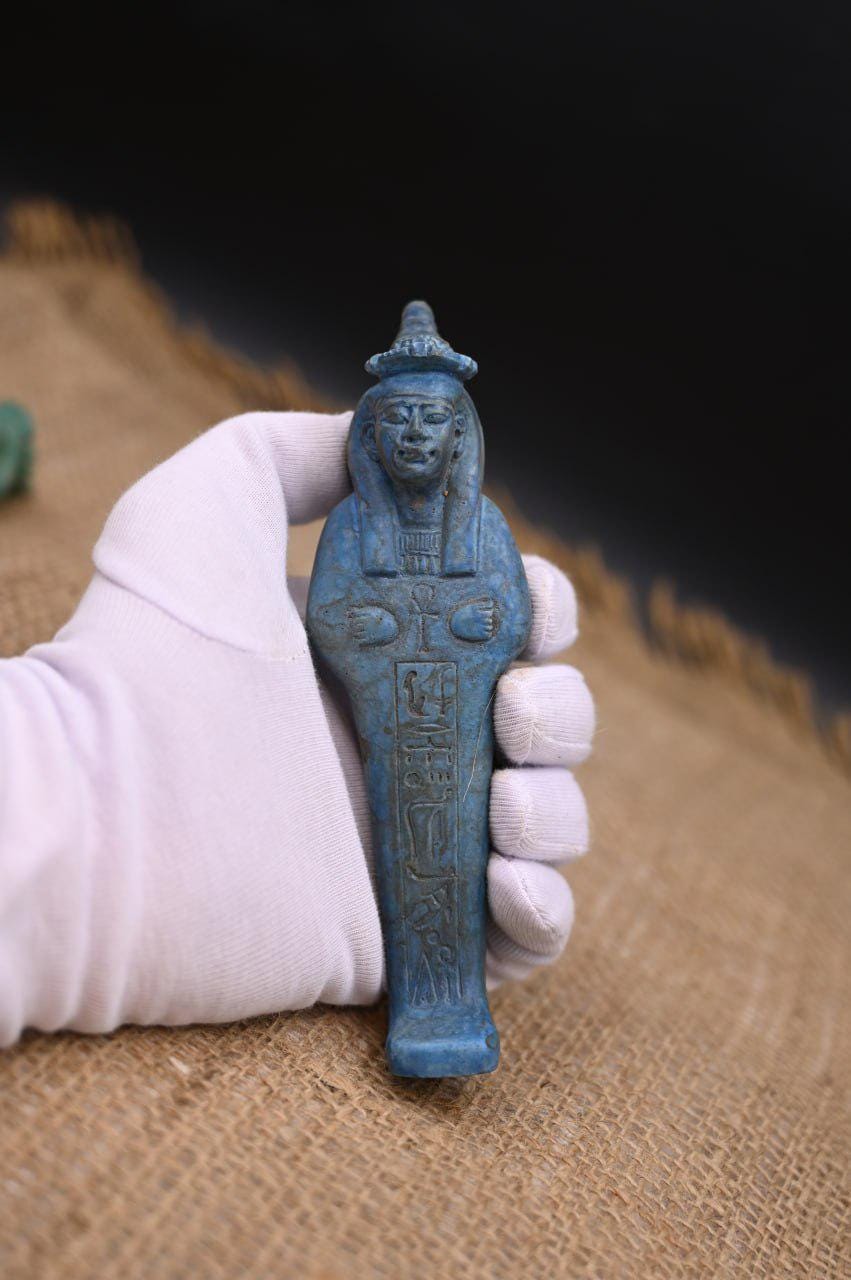
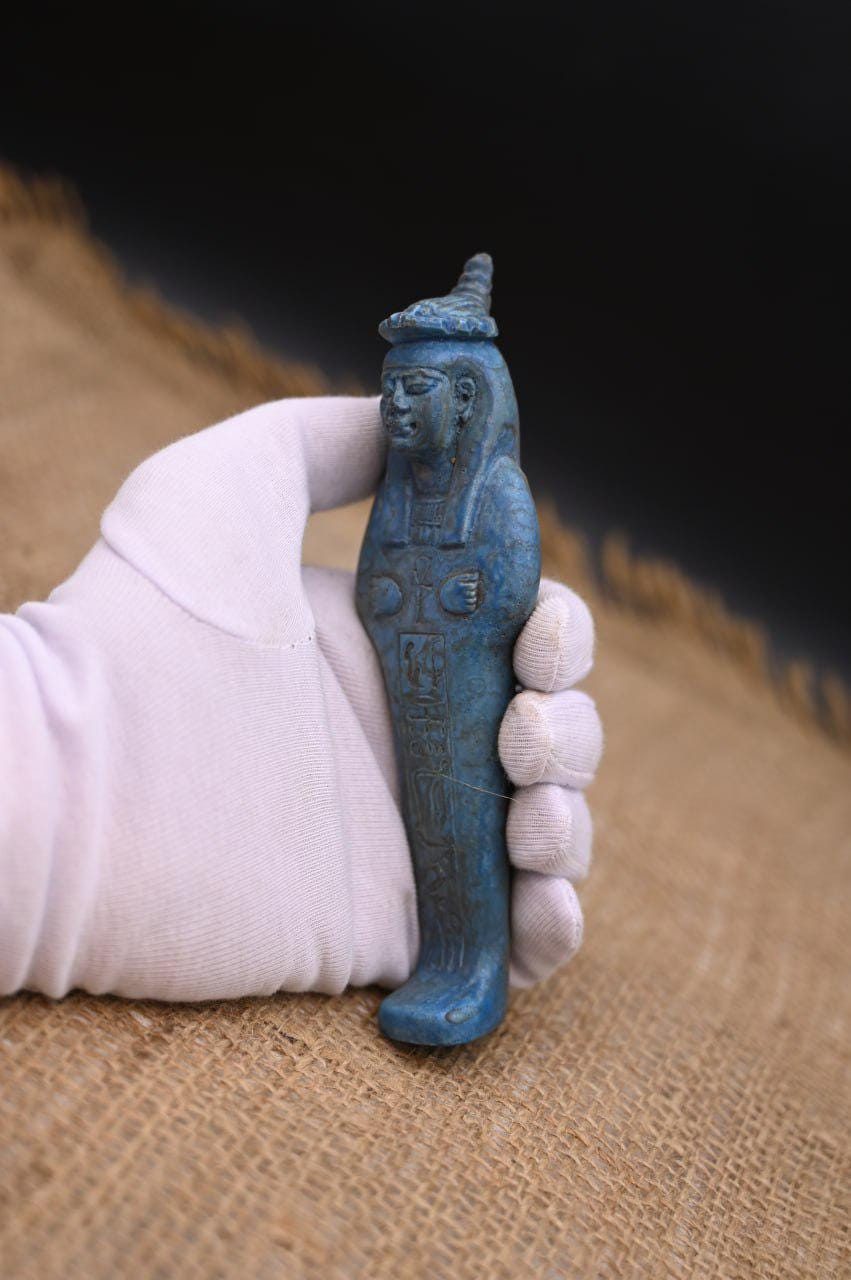
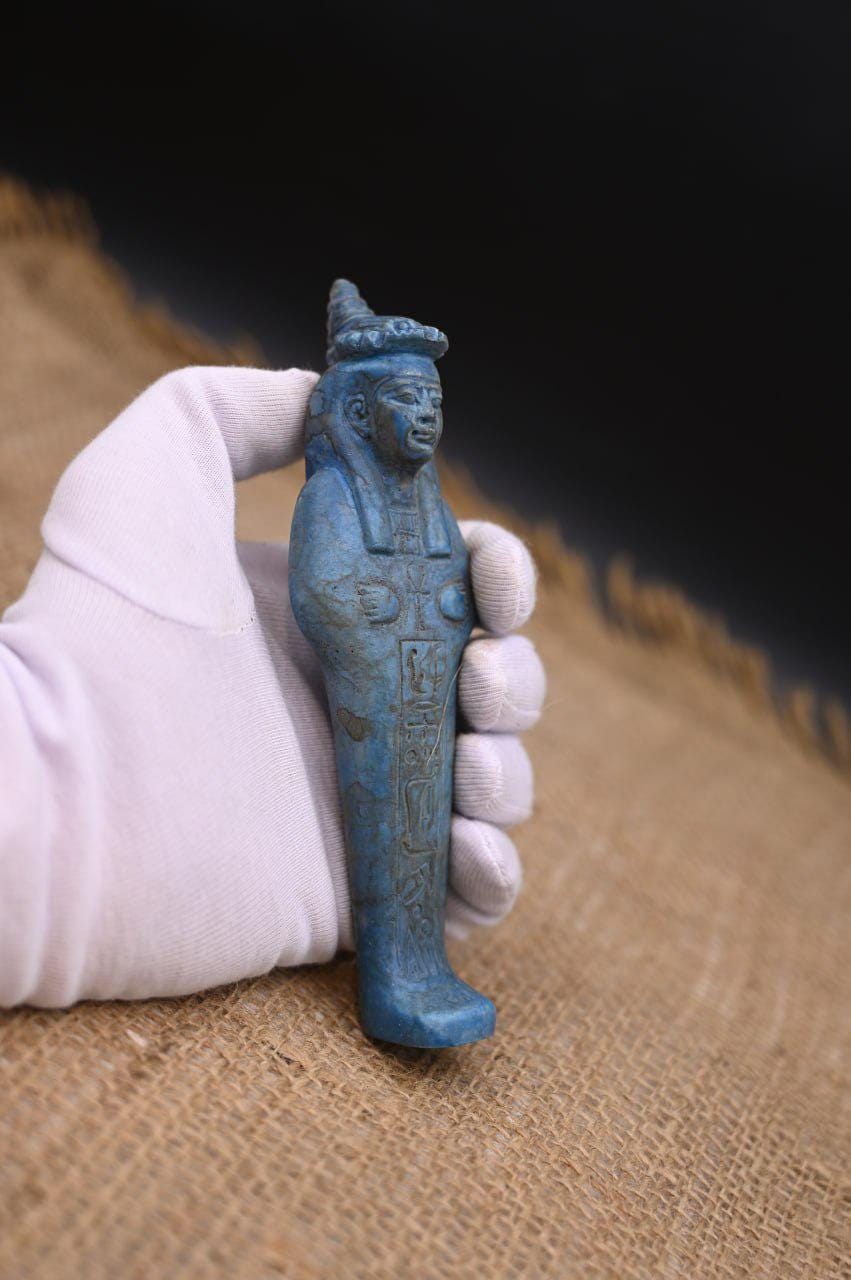
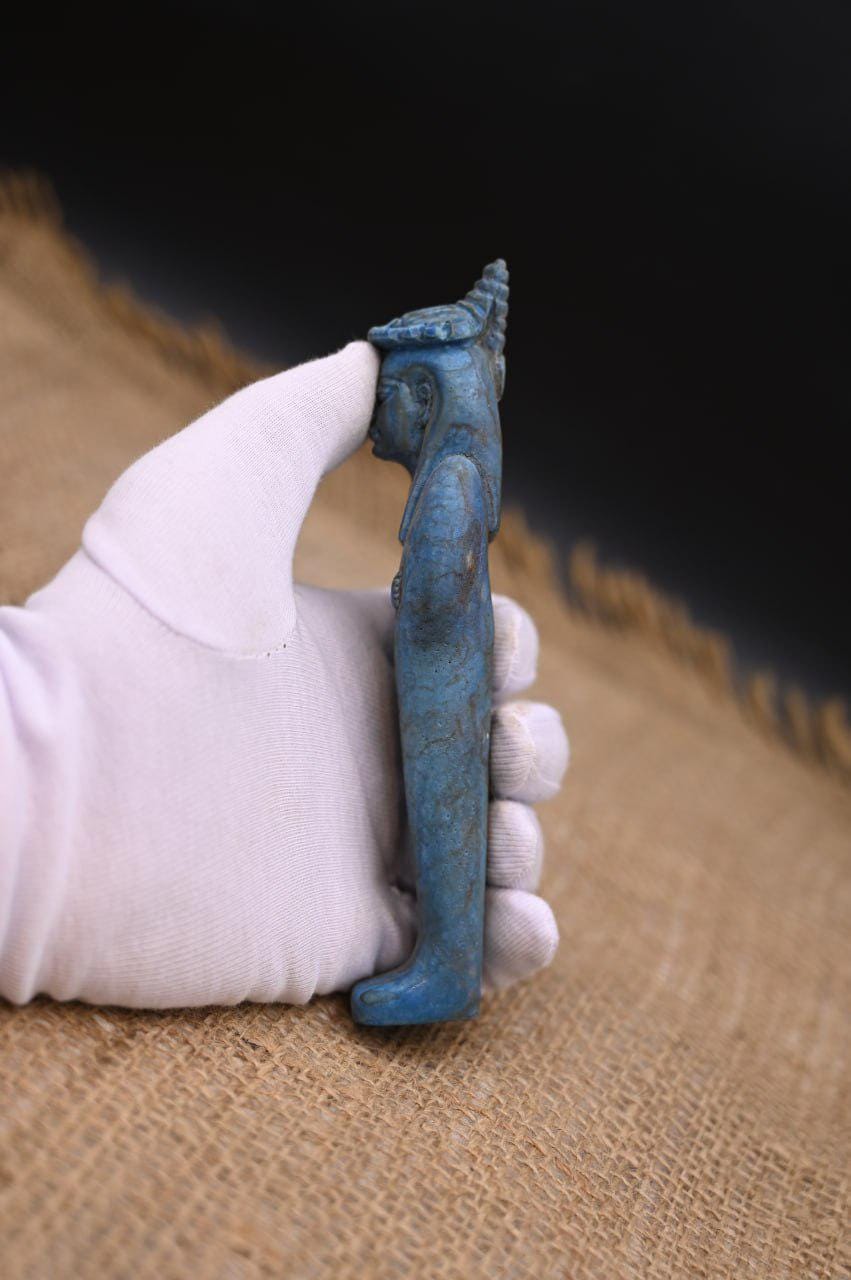
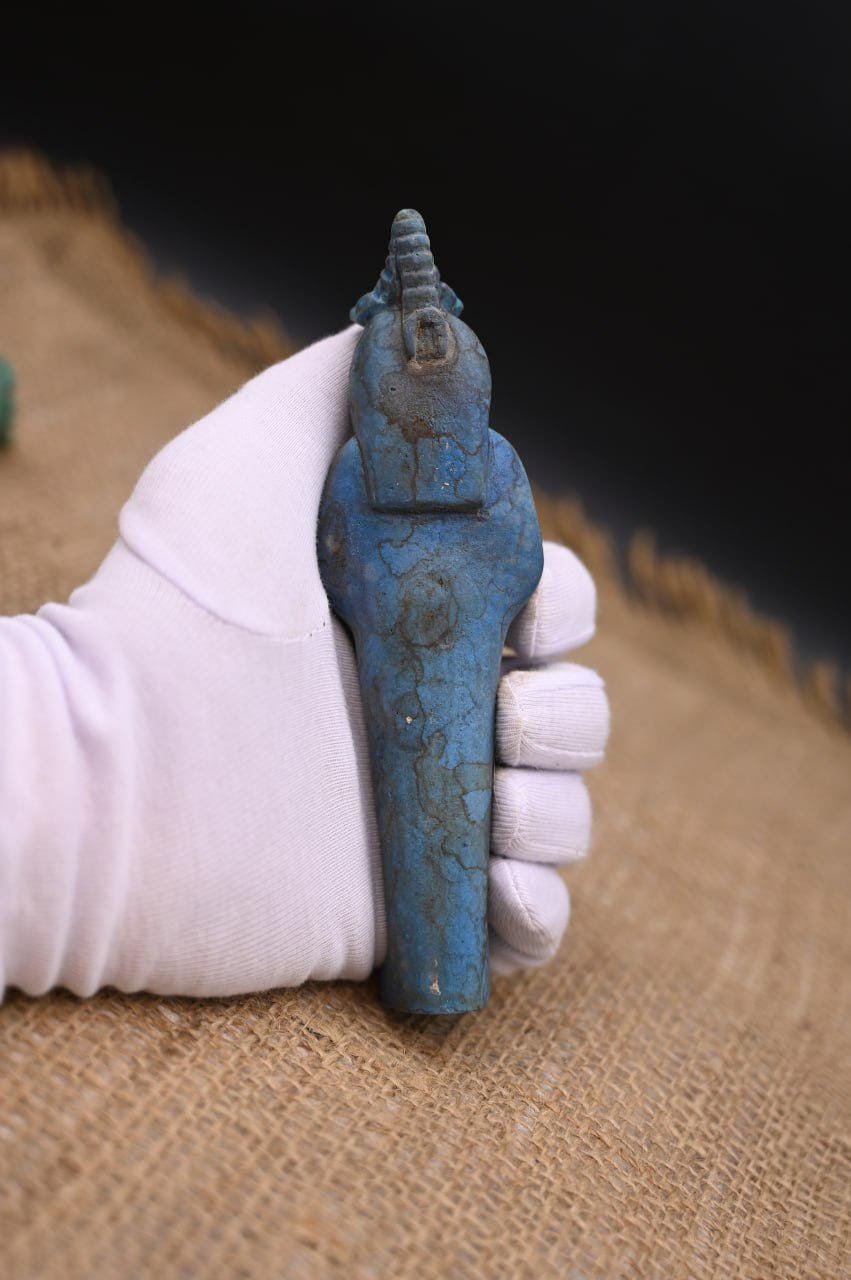
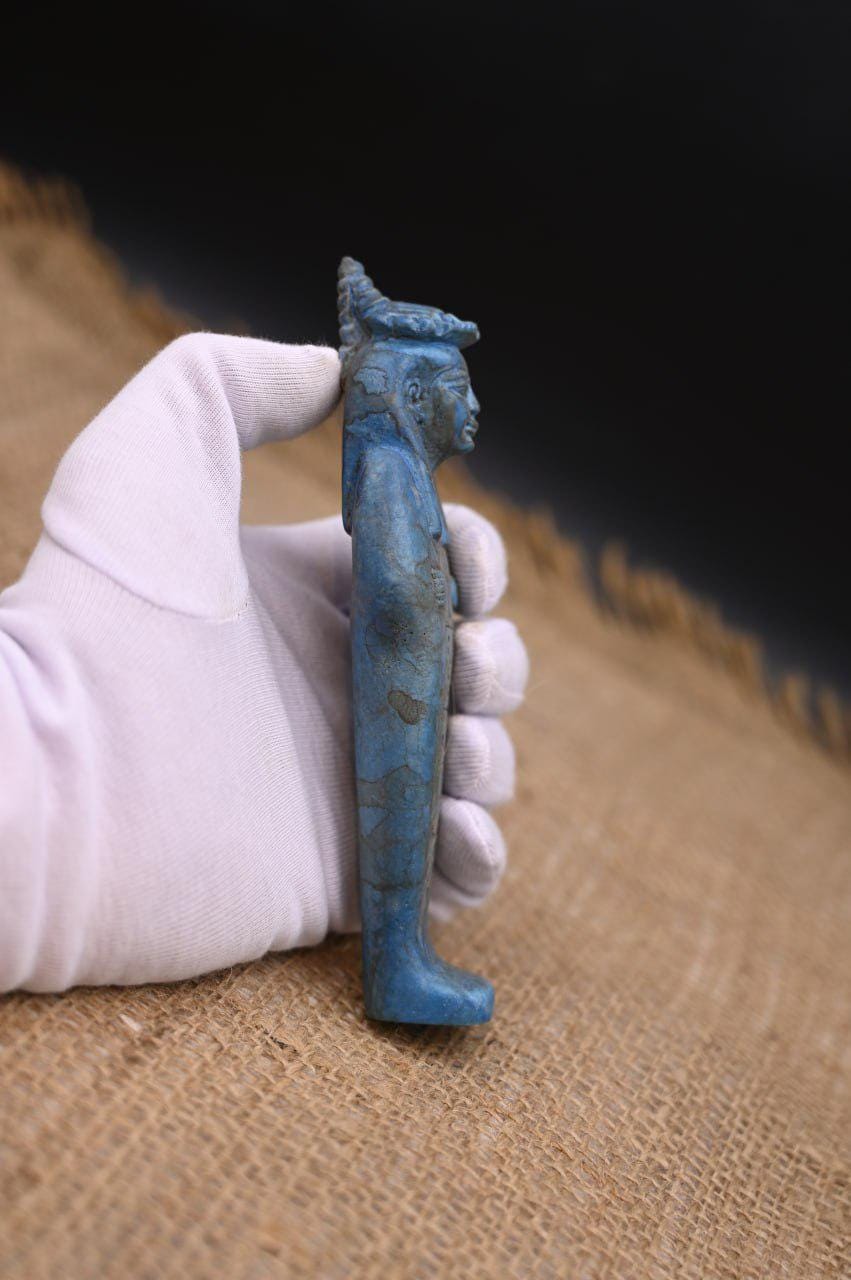
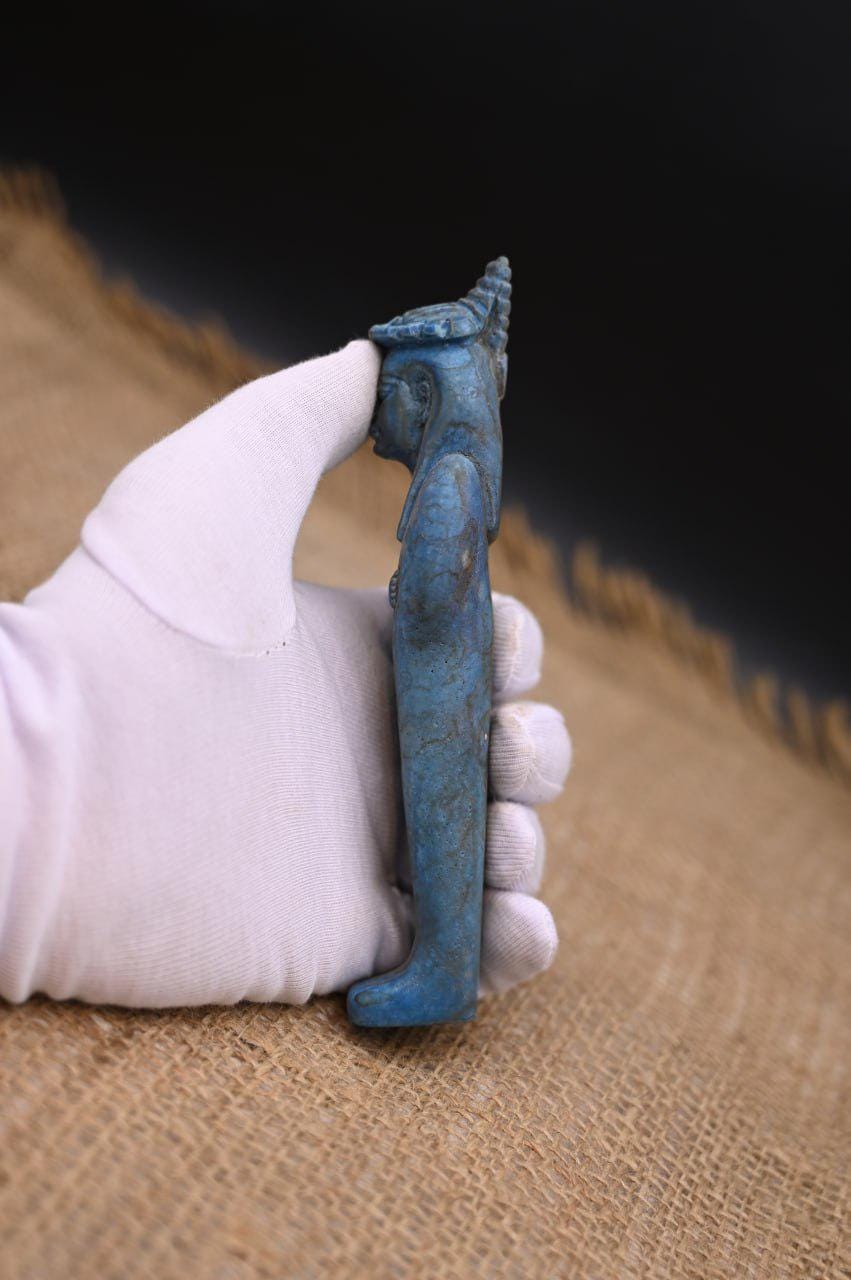
The statue is a small, Blue, mummiform figure. It has a human face with a headdress. The arms are not clearly visible, but Ushabtis often have their arms crossed over their chest. There are hieroglyphic inscriptions running down the front of the figure.
𝐇𝐢𝐬𝐭𝐨𝐫𝐲:
Serket (also known as Serqet, Selkis, and Selket) is an Egyptian goddess of protection associated with the scorpion. She was worshipped widely in Lower Egypt as a great Mother Goddess in the Predynastic Period (c. 6000- c. 3150 BCE) and so is among the older deities of Egypt.
She is associated with healing, magic, and protection, and her name means “She Who Causes the Throat to Breathe”. Her symbols are the scorpion, the Ankh, and the Was Sceptre, all of which convey her benevolent aspects. In the Predynastic Period, she was the protector of the Kings as evidenced by archaeological finds linking her by the name Serqet to the Scorpion Kings, defeated at some point around the reign of Narmer (r. c. 3150 BCE). During that period she was already closely associated with protection and her worship had grown from the Delta Region of Lower Egypt to the cities of Upper Egypt.
By the time of the First Dynasty (c. 3150-2890 BCE) she was associated with the god Nun (also known as Nu), the Father of the Gods. Nun was the watery abyss from which the primordial hill (the ben-ben) rose on which Atum (Ra) stood at the dawn of creation. It is unclear what role she played, if any, in the creation of the world, but evidence suggests she may have been the wife of Atum, the first son of Nun, or even the wife of Nun himself. Later, she is represented as one of the deities aboard the barge of the sun god Ra, who watch out for the serpent Apophis as the boat sails through the night sky.
She is the goddess of venomous creatures, most notably the scorpion, and is depicted as a beautiful woman, arms outstretched in a gesture of protection, with a scorpion on her head. The scorpion is purposefully shown without a stinger or claws to represent Serket’s role as protector against venomous stings. Serket was eventually absorbed into the Cult of Horus where she became closely associated with death and the souls of the deceased. She was then known as “Lady of the Beautiful Tent” which referred to the tent of the embalmers. She is best known for her golden statue and the alabaster canopic jar from the Tomb of Tutankhamun.
𝐨𝐮𝐫 𝐬𝐡𝐨𝐩 𝐩𝐨𝐥𝐢𝐜𝐲:
*Keep a close eye on your inbox for shipping updates and tracking information.
*Providing a valid phone number is mandatory for shipping purposes, especially for international orders from the heart of Egypt.
*If you encounter any issues or concerns regarding your order, please don’t hesitate to contact us. Rest assured, we will handle the case promptly and professionally, ensuring a satisfactory resolution.
For Personalization :-
Please provide your phone number to complete the international shipping process 📞
✅ All customs duties, taxes, and import fees are already included in the shipping price.
Your order will arrive safely at your door with no extra charges.
𝙉𝙤𝙩𝙚:
Please be aware that any customs duties, import taxes, or additional charges imposed by your country are the buyer’s responsibility.
Reviews
There are no reviews yet.